Free shipping on orders over R1180 | First order? Get 10% off orders of R499 and above instead

Coupon code applied successfully
“Personalised Shampoo – 500ml” has been added to your basket. View basket
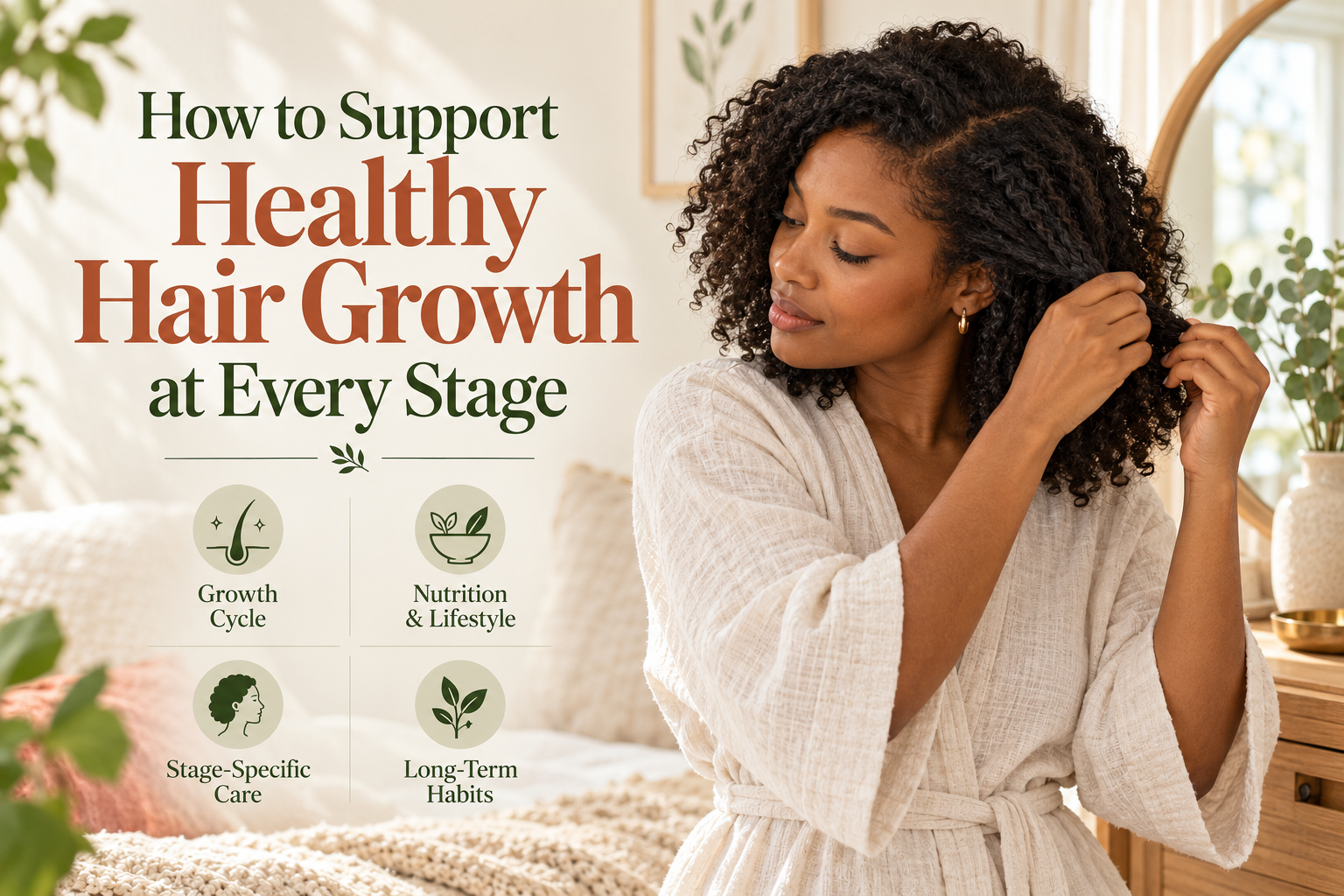
How to Support Healthy Hair Growth at Every Stage
Healthy hair growth is a natural process, but understanding what happens beneath the scalp can help you make better decisions about how you care for your hair. From the moment a new strand begins growing to the point when an older strand eventually sheds, each hair moves through its own cycle. Understanding these stages can help you see why your hair changes over time, why some short hairs are perfectly normal, and why protecting your hair from breakage matters as much as supporting new growth.
Healthy hair growth is not simply about making your hair grow faster. It also involves maintaining a healthy scalp environment, caring for new strands and protecting the lengths you already have. With a consistent, personalised haircare routine, you can support your hair throughout its natural growth cycle while helping it remain strong, manageable and healthy-looking.
Understanding the Hair Growth Cycle
Every hair on your head follows a natural growth cycle consisting of three main phases: anagen, catagen and telogen. These phases determine how long an individual hair grows, when its growth slows down and when it eventually sheds.
Importantly, your hair follicles do not all follow the same cycle at the same time. While some hairs are actively growing, others may be resting or preparing to shed. This is why you can continue to grow new hair while naturally losing older strands every day.
Understanding these phases provides a useful foundation for supporting healthy hair growth.
The Anagen Phase: Active Hair Growth
The anagen phase is the active growth stage, during which cells within the hair follicle produce the hair shaft. The length of this phase largely determines how long an individual strand can grow before it eventually enters the next stage of its cycle.
The anagen phase can last for several years, although its duration varies between individuals and is influenced by factors such as genetics, hormones and overall health. Scalp hair typically spends most of its time in this phase.
During active growth, newly produced hair gradually emerges from the scalp. As it grows, the strand becomes part of the lengths you wash, condition, detangle and style.
Although haircare products cannot determine how long a follicle remains in the anagen phase, maintaining a healthy scalp environment and protecting emerging strands from damage can help support healthy hair growth and preserve the hair you produce.
The Catagen Phase: The Transition Stage
The catagen phase is a short transitional period that usually lasts around two to three weeks. During this time, active growth stops, and the lower part of the hair follicle begins to shrink as it prepares for the resting phase.
This is a normal part of the hair growth cycle, rather than a sign that something is wrong with your hair.
Because the transition happens within the follicle, you generally cannot identify which hairs are in the catagen phase simply by looking at your scalp. There is also no specific haircare product that can prevent this natural transition or keep every strand actively growing.
Instead, continue following a routine that keeps your scalp comfortable and your existing hair well conditioned, manageable and protected from unnecessary damage.
The Telogen Phase: Resting and Shedding
The telogen phase is the resting stage of the hair growth cycle. It typically lasts around two to three months, although the duration can vary. During this period, the follicle is relatively inactive, and the hair is no longer actively growing.
Eventually, the resting hair sheds and the follicle can begin a new growth cycle. A new strand may then emerge as the next anagen phase begins.
This explains why finding hair in your brush, shower or on your clothes is not automatically a sign of unhealthy hair. Shedding is a normal part of the cycle, and different follicles reach this stage at different times.
However, a noticeable increase in shedding, persistent thinning or the appearance of distinct patches of hair loss should not automatically be attributed to the normal cycle. These changes can have several causes and may warrant professional assessment.
For a closer look at what is considered typical, read our article on How Much Hair Loss Is Normal in a Day? If you have noticed a persistent increase in shedding, our article Hair Shedding More Than Usual? explores possible contributing factors in more detail.
Supporting Healthy Hair Growth During the Anagen Phase
Although the hair growth cycle cannot be controlled through your haircare routine, there are practical ways to support your hair while it is actively growing.
Start by paying attention to your scalp. Regular cleansing helps remove excess oil, sweat, product build-up and other impurities that accumulate between washes. The right washing frequency depends on your scalp, lifestyle and how quickly your hair becomes oily or dirty.
Nutrition also plays an important role. Hair production requires adequate energy, protein and essential nutrients. Eating a varied, balanced diet helps provide the building blocks your body needs to produce hair. If you suspect a nutritional deficiency or experience unexplained hair changes, seek advice from a healthcare professional rather than starting supplements without guidance.
It is equally important to minimise damage as your hair grows. Every new centimetre of hair adds to the length you will eventually need to maintain. Excessive heat styling, rough detangling and repeated friction can weaken the hair shaft, making it more vulnerable to breakage.
Remember that healthy hair growth and hair length retention are not quite the same thing. Your follicles can produce new hair even when breakage prevents your overall length from increasing. Supporting growth while protecting the strands you already have helps address both sides of the equation.
Caring for New Hair Growth and Baby Hairs
Have you ever noticed short, fine hairs around your hairline, parting or temples and wondered whether they are new growth or breakage?
Short hairs can have several explanations. They may be newly emerging strands, naturally shorter hairs that have not reached their full length, or hairs that have broken before reaching the length of the surrounding strands. Their appearance alone does not always reveal which is the case.
New growth may initially appear finer or shorter than the rest of your hair because it has only recently emerged from the scalp. Hair can also look different in texture as it grows, particularly when the new strands have a different curl pattern from the lengths below.
If you have noticed that your hair is growing back with a different texture, read our article on Hair Growing Back Curly to explore why this can happen.
How to Protect New Hair Growth
Newly emerging hairs still need gentle care. Although their short length can make them seem less vulnerable, repeated tension, friction and aggressive styling can contribute to breakage around the hairline.
To help protect these strands:
- Be gentle when styling your hair. Avoid repeatedly pulling short hairs tightly into place or using excessive tension around your hairline.
- Detangle carefully. Work through knots gradually rather than pulling a brush or comb forcefully through tangled hair.
- Keep your hair conditioned. Conditioner helps improve slip and manageability, making the lengths easier to detangle without unnecessary friction.
- Limit excessive heat. Frequent high-temperature styling can damage the hair shaft, including shorter strands that are still growing.
- Pay attention to changes over time. If short hairs gradually become longer, they may be regrowth. If they repeatedly snap at similar lengths, breakage may be contributing.
Avoid assuming that every short strand needs to be treated with a growth-promoting product. In many cases, gentle handling and consistent care are more appropriate than adding unnecessary treatments.
If you notice widening partings, persistent thinning around the hairline or sudden changes in the amount of hair you lose, consider consulting a dermatologist. These changes can have causes beyond everyday hair breakage.
Protecting Your Hair During the Transition and Resting Phases
Once a hair leaves the active growth phase, it does not suddenly become irrelevant to your haircare routine. The strand remains part of your visible hair until it eventually sheds, and the condition of that strand still depends partly on how you treat it.
During the catagen and telogen phases, the follicle undergoes natural changes as the hair transitions towards shedding. Haircare products cannot restart active growth in a follicle simply because a strand has entered its resting phase. However, you can continue caring for the existing lengths to help maintain their condition.
This means keeping your usual gentle cleansing and conditioning routine, detangling carefully and avoiding unnecessary damage from heat, friction and tight hairstyles.
It is also worth remembering that you cannot reliably determine which phase an individual hair is in just by examining a strand that has fallen out. The hair growth cycle happens largely beneath the surface of the scalp, and shedding can occur as part of the normal process.
If you notice more hair falling out than usual, look at the overall pattern rather than assuming that all shedding is a result of entering the telogen phase. Changes in health, hormones, stress and nutritional status can also influence shedding.
How Preventing Breakage Supports Healthy Hair Growth
One of the most important ways to support your hair throughout its growth cycle is to prevent avoidable damage to the hair shaft.
Hair grows from follicles within the scalp, but the visible lengths consist of hair fibres that cannot repair themselves biologically once damaged. As these lengths become older, they have generally experienced more washing, brushing, styling and environmental exposure. This can make them more vulnerable to wear and breakage.
When hair breaks before reaching the desired length, it can seem as though it has stopped growing, even when new hair is continuing to emerge from the scalp.
Build a Routine That Helps Minimise Damage
A well-chosen conditioner can help smooth the hair surface, improve manageability and reduce friction during detangling. Hair masks provide additional conditioning for strands that need more softness, manageability or targeted care, depending on their formulation.
Leave-in products can also help with hydration, frizz control and easier styling between washes. If you use heat-styling tools, a suitable heat protectant can help reduce heat-related damage when used as directed.
Your everyday habits matter, too. Avoid aggressively brushing wet or tangled hair, use a suitable detangling tool and be mindful of repeated tension from tight hairstyles. You do not necessarily need to eliminate heat styling, but using lower temperatures and reducing unnecessary exposure can help limit damage.
These habits do not change the biological growth cycle. Instead, they help protect the hair that grows during it, allowing you to retain more of the length you naturally produce.
For a more detailed guide to retaining length, read How to Grow Longer Hair Without Constant Breakage.
Building a Personalised Routine to Support Healthy Hair Growth
Supporting healthy hair growth involves more than choosing products marketed for hair growth. Your routine should help maintain your scalp, care for emerging strands and protect the lengths you already have from unnecessary damage.
At True to Life™, we take a personalised approach to haircare because your scalp, hair porosity, texture, lifestyle and individual concerns all influence what your hair needs. Rather than relying on generic, off-the-shelf products, your routine can be tailored to help address those needs throughout the hair growth cycle.
Choose a Personalised Shampoo for Your Scalp
A healthy haircare routine starts with cleansing your scalp. Regular washing helps remove excess oil, sweat and product build-up, creating a clean environment for your hair to grow.
However, not every scalp has the same needs. Factors such as oiliness, dryness, sensitivity, product build-up and washing frequency can influence which shampoo is most appropriate.
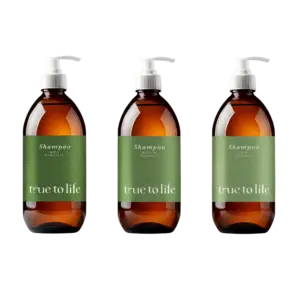
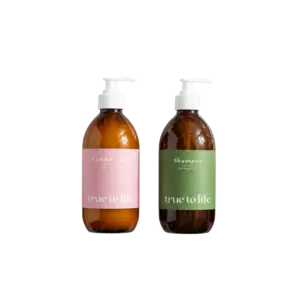
True to Life™’s personalised formulations take your individual scalp and hair needs into account, helping you choose a shampoo suited to your circumstances rather than relying on a generic formula. By keeping your scalp clean and comfortable, you can support good scalp care throughout the active growth phase and beyond.
Remember that shampoo does not control how quickly your follicles produce hair or how long they remain in the growth phase. Its role is to cleanse your scalp and hair according to their needs.
Follow With a Conditioner Suited to Your Hair
While shampoo focuses on cleansing, conditioner helps care for the hair fibre itself. It improves softness, slip and manageability, helping reduce friction when you detangle and style your hair.
The right conditioner depends on factors such as your hair’s porosity, texture and condition. Hair that struggles to absorb and retain moisture may need a different approach from hair that is more porous or prone to damage.
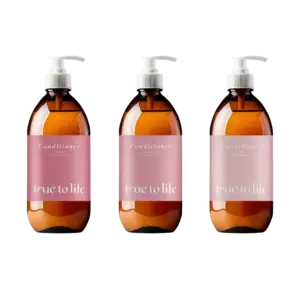
True to Life™’s personalised approach considers these differences when helping you choose a conditioner suited to your hair. Giving your lengths the conditioning they need can make them easier to manage and help minimise avoidable breakage as your hair grows.
This is particularly important when caring for new growth alongside older lengths. Although newly emerging hairs may be short, the surrounding hair still needs appropriate conditioning to remain manageable and less vulnerable to mechanical damage.
Consider Scalp Oils and Targeted Scalp Care
Scalp care does not end with shampoo. Depending on your individual needs, additional scalp-care practices may form part of your routine.
Scalp oils can be useful for certain people, depending on their formulation, ingredients and scalp condition. However, they are not essential for everyone, and applying more oil does not automatically encourage faster hair growth.
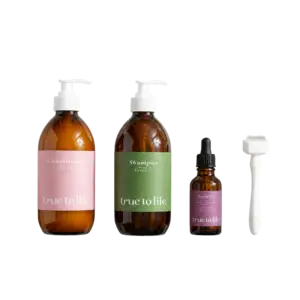
Some people also explore scalp massage, red-light therapy or microneedling tools such as derma stamps. These approaches should not be treated as interchangeable: their evidence, purposes and risks differ.
Gentle scalp massage may be a relaxing addition to a routine, but evidence that it significantly increases hair growth remains limited. Red-light devices have some evidence of benefit for certain types of hair loss, although results depend on the device, treatment protocol and individual circumstances. They are not a requirement for healthy hair growth.
Derma stamping and other microneedling procedures deliberately puncture the skin and carry risks, including infection, irritation and scarring. If you are considering microneedling for hair loss, consult a qualified healthcare professional or dermatologist before using a device on your scalp.
At True to Life™, we believe scalp care should reflect your individual needs rather than involve adding unnecessary steps. A personalised routine can help you identify the products suited to your scalp, while any additional treatment should be considered separately and chosen with appropriate guidance.
Use a Hair Mask That Matches Your Hair’s Needs
Your hair’s conditioning needs can change depending on its porosity, condition, styling habits and environmental exposure. A hair mask can provide additional conditioning when your lengths need more softness, smoothness or manageability.
True to Life™ offers different mask formulations to address different hair needs:
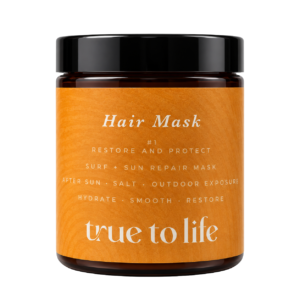
- Surf + Sun Repair: designed for hair needing targeted repair and conditioning after exposure to environmental stressors.
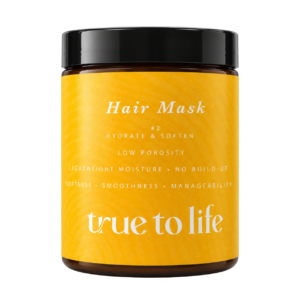
- Hydrate & Soften: formulated for low-porosity hair.
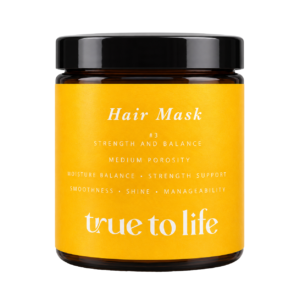
- Balance & Strength: formulated for medium-porosity hair.
- Repair & Restore: formulated for high-porosity hair.
Choosing an appropriate mask helps you care for the hair fibre rather than treating every hair type as though it has identical needs. This can be particularly useful when protecting older lengths that have experienced repeated washing, brushing, heat styling and environmental exposure.
Although a hair mask cannot change the biological growth cycle, it can help improve the condition and manageability of your lengths, supporting your efforts to minimise breakage as your hair grows.
Maintain Your Hair Between Washes With Leave-In Care
Your hair continues to experience friction, environmental exposure and styling between wash days. A leave-in product can help maintain manageability and provide additional conditioning without requiring another wash.
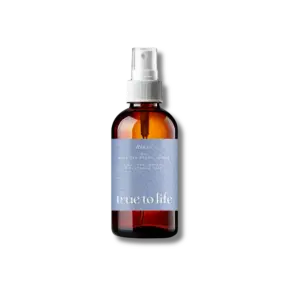
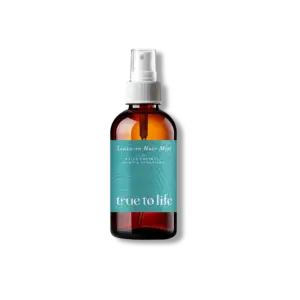
True to Life™’s Leave-in Hair Mist is designed to support hydration, shine and frizz control, making it a useful option for people who need help keeping their hair manageable between washes.
By choosing leave-in care according to your hair’s needs, you can help reduce unnecessary tugging and rough handling during everyday styling. This is especially relevant when protecting shorter new hairs and maintaining the condition of your existing lengths.
The aim is not to coat your hair with as many products as possible. It is to select the right support for your hair’s condition and lifestyle.
Protect Your Hair When Heat Styling
Heat styling can contribute to damage when tools are used too frequently, at excessive temperatures or without appropriate precautions. Over time, damage to the hair shaft can make strands more vulnerable to breakage.
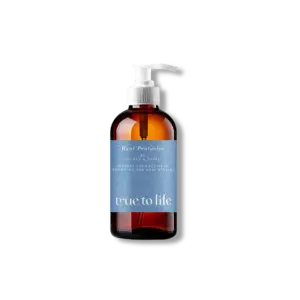
True to Life™’s Heat Protector Serum is designed to help protect the hair during heat styling. Incorporating an appropriate heat protectant into your routine, alongside sensible temperature settings and less frequent heat exposure, can help reduce avoidable damage.
Remember that heat protection does not make hair completely immune to heat damage. Gentle styling practices still matter, particularly when your goal is to retain the length your hair naturally grows.
Review Your Routine as Your Hair’s Needs Change
A personalised routine should not be treated as something you choose once and never reconsider. Your hair and scalp needs can change with the seasons, your environment, changes in water quality, colouring, styling habits and other lifestyle factors.
True to Life™ takes these individual differences into account when helping you select a personalised haircare routine. Our hair quiz considers factors such as your scalp, hair porosity, concerns, lifestyle and goals to help guide your product choices.
If your circumstances change significantly, reviewing your routine can help ensure your products continue to suit your needs.
Ultimately, the purpose of a personalised routine is not to control the hair growth cycle or promise faster growth. It is to maintain your scalp, condition your hair and minimise avoidable breakage so that you can care for your hair throughout every stage of its natural cycle.
Understanding Normal Shedding and When to Seek Help
Shedding is a normal part of the hair growth cycle. Most people lose some hair every day as individual strands reach the end of their cycle, and the amount can vary from person to person.
However, a noticeable or persistent increase in shedding, visible thinning, bald patches or changes to the scalp should not automatically be dismissed as normal. These changes can be associated with a range of factors, including hormonal changes, illness, stress, nutritional deficiencies and certain medical conditions.
Haircare products can help maintain the condition of your scalp and hair, but they cannot address every underlying cause of hair loss. If you are concerned about a change in your shedding pattern, a healthcare professional can help identify possible causes and recommend appropriate treatment.
For more information, read our articles How Much Hair Loss Is Normal in a Day? and Hair Shedding More Than Usual? to understand the difference between everyday shedding and changes that may deserve further attention.

R369.00
Estimated delivery dates: Nov 6, 2026 - Nov 11, 2026
R339.00
Estimated delivery dates: Nov 6, 2026 - Nov 11, 2026
R515.00
Estimated delivery dates: Nov 6, 2026 - Nov 11, 2026
R309.00
Estimated delivery dates: Nov 6, 2026 - Nov 11, 2026
R918.00 – R1,402.00Price range: R918.00 through R1,402.00
Estimated delivery dates: Nov 9, 2026 - Nov 12, 2026
R279.00
Estimated delivery dates: Nov 6, 2026 - Nov 11, 2026
R279.00
Estimated delivery dates: Nov 6, 2026 - Nov 11, 2026
R499.00
Estimated delivery dates: Nov 9, 2026 - Nov 12, 2026
R269.00
Estimated delivery dates: Nov 9, 2026 - Nov 12, 2026
R499.99
Estimated delivery dates: Nov 9, 2026 - Nov 12, 2026
R269.00
Estimated delivery dates: Nov 9, 2026 - Nov 12, 2026
R969.00
Estimated delivery dates: Nov 9, 2026 - Nov 12, 2026
R499.00
Estimated delivery dates: Nov 9, 2026 - Nov 12, 2026
R269.00
Estimated delivery dates: Nov 6, 2026 - Nov 11, 2026
R249.00
Estimated delivery dates: Nov 6, 2026 - Nov 11, 2026
Start your hair growth journey with us.
Take the Hair Assessment to get a your recommended products to support your hair growth journey
Final Thoughts
Healthy hair growth is a natural, ongoing process. While you cannot control every stage of the hair growth cycle, understanding how it works can help you make more informed decisions about your routine.
From caring for your scalp during active growth to protecting new baby hairs, maintaining the condition of your lengths and recognising when shedding may need further attention, each part of your routine has a role to play.
The goal is not to force your hair to grow faster or prevent normal shedding. It is to provide appropriate care throughout the cycle, minimise avoidable breakage and help your hair remain in good condition as it grows.
With True to Life™’s personalised approach, you can choose a routine that reflects your hair’s individual needs and adapt it as those needs change. Because supporting healthy hair growth means caring for the hair you are growing, as well as the hair you already have.
Views: 80