Free shipping on orders over R980 | First order? Get 10% off orders of R499 and above instead

“#4 Blue Pea Herbal Rinse | Anti-Yellow Toning Rinse for Grey, White & Platinum Hair” has been added to your basket. View basket
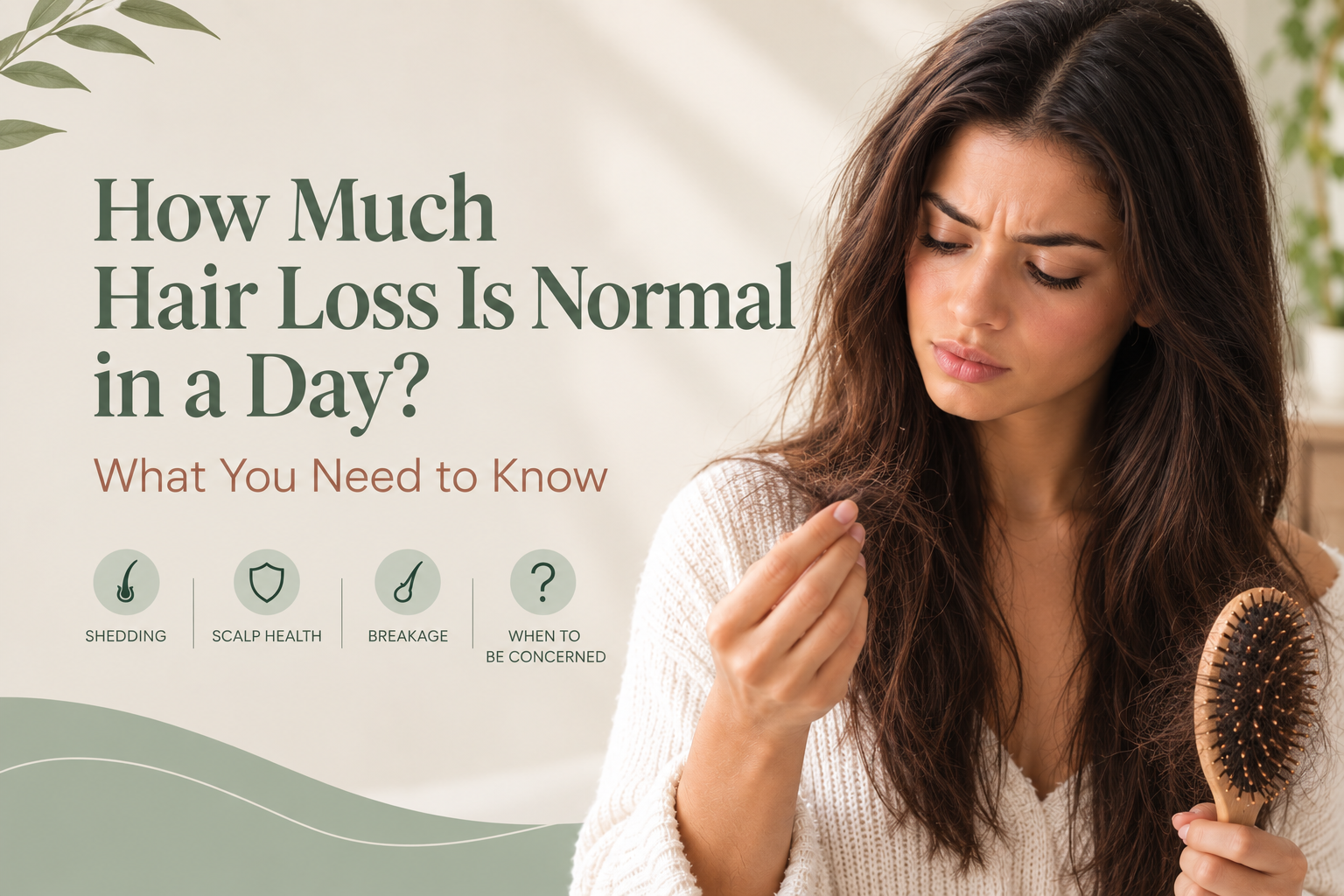
How Much Hair Loss Is Normal in a Day? What You Need to Know
Finding a clump of hair in your shower drain or seeing strands covering your hairbrush can be alarming. But before you assume you’re experiencing hair loss, it’s important to understand how much hair loss is normal in a day and why the amount you see can vary so much.
Losing some hair every day is a completely normal part of the hair-growth cycle. In fact, most people naturally shed around 50 to 100 hairs per day. However, that number is only a general estimate. Your hair type, length, washing routine and how often you detangle can all affect how much hair you actually notice.
The important thing isn’t necessarily counting every strand. It’s understanding what is normal for your hair and recognising when something has genuinely changed.
How Much Hair Loss Is Normal in a Day?
The commonly cited range is around 50 to 100 hairs per day. These hairs have naturally reached the end of their growth cycle and are shed to make room for new hairs to grow.
That doesn’t mean shedding exactly 50 to 100 hairs every day is a requirement for healthy hair. You might naturally shed less, while someone else might shed more.
Your shedding can also fluctuate from day to day. You may barely notice any loose hairs one day and then see considerably more after washing or detangling.
So, how much hair loss is normal in a day? There isn’t one exact number that applies to everyone.
Why Does Hair Shed Every Day?
Hair doesn’t grow continuously without eventually falling out. Each strand moves through different stages of the hair-growth cycle.
During the shedding phase, the hair naturally detaches from the follicle and eventually falls away. A new hair can then grow from the same follicle.
This means seeing hair in your brush, on your clothes or in the shower isn’t automatically a sign that something is wrong. Some shedding is necessary and expected.
The concern is more about a noticeable change in your normal shedding pattern, particularly if it continues over time or is accompanied by visible thinning.
Why Does It Look Like You’re Losing More Hair on Wash Day?
If you only wash or thoroughly detangle your hair every few days, you may notice much more hair coming out at once.
This is especially common with curly and coily hair. Shed hairs can become caught among the surrounding strands instead of immediately falling away. When you finally wash or detangle your hair, several days’ worth of naturally shed hairs can come out together.
That can make the amount look dramatic, even when your daily shedding is completely normal.
So if you’re wondering how much hair loss is normal in a day, don’t judge your shedding based solely on what you see in the shower.
How Much Hair Loss Is Normal in a Day for Different Hair Types?
There isn’t a single shedding amount that applies to every hair type.
Hair texture, length and styling habits can all influence how noticeable shedding is.
For example, someone with straight hair who brushes their hair every day may see loose strands regularly. Someone with tightly curled hair who doesn’t manipulate their hair between wash days might see a larger amount when they finally detangle.
Longer hair can also make shedding look more dramatic because individual strands are much more noticeable.
The amount of hair you can see isn’t necessarily an accurate representation of how much you shed that particular day.
How Can You Tell Normal Shedding From Excessive Hair Loss?
Instead of obsessively counting individual strands, pay attention to whether your shedding looks noticeably different from your usual pattern.
Signs that your hair loss may be more than your normal shedding include:
- A sudden and significant increase in the amount of hair you’re losing
- Persistent excessive shedding
- Noticeable thinning
- A widening part
- Increased visibility of your scalp
- Bald or noticeably sparse patches
- Changes around your hairline
- Hair coming out in unusually large amounts
- Shedding accompanied by scalp irritation or other changes
One unusually heavy wash day doesn’t necessarily mean you’re experiencing excessive hair loss. A consistent change is much more meaningful than one isolated incident.
Hair Shedding vs Hair Breakage: What’s the Difference?
Not every strand you find on your clothes or in your brush has been shed from the root.
Shedding happens when a hair naturally reaches the end of its growth cycle and falls from the follicle.
Breakage happens when the hair shaft snaps somewhere along its length.
This distinction matters because excessive breakage can make it look as though you’re losing a lot of hair when the issue is actually damage to the lengths and ends.
Broken hairs are often shorter pieces of varying lengths, while a naturally shed strand will generally be a complete length of hair.
If you’re seeing lots of short pieces around your shoulders, clothing or bathroom sink, your hair may be breaking rather than simply shedding.
Scalp Health Matters More Than You Think
Your scalp is where every strand of hair begins, so keeping it healthy should be an important part of your hair-care routine.
A healthy scalp needs to be cleansed, but clean doesn’t have to mean stripped. Using products that are too harsh for your scalp can leave it feeling dry, tight, itchy or uncomfortable. Your scalp naturally produces oils for a reason, so constantly stripping them away isn’t necessarily better for your hair.
That’s one reason True to Life™ focuses on non-stripping hair care. Our approach is to cleanse the scalp without unnecessarily removing the natural oils that help keep it comfortable and balanced.
Don’t Forget About Scalp Oils
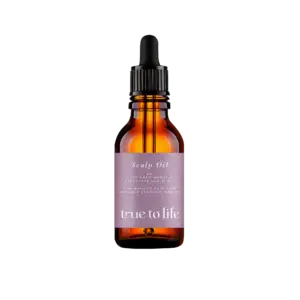
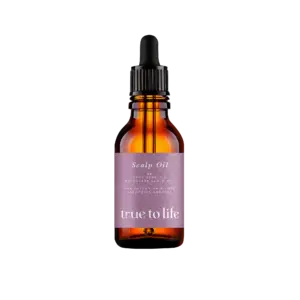
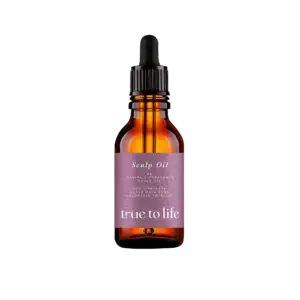
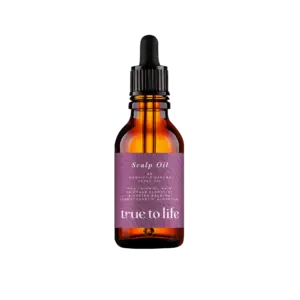
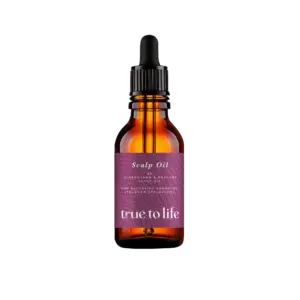
Scalp care doesn’t stop at cleansing. Depending on your individual scalp needs, incorporating a scalp oil into your routine can help support moisture, nourishment and overall scalp comfort.
True to Life™ scalp oils are created with scalp health in mind, giving your scalp targeted care rather than treating it as an afterthought.
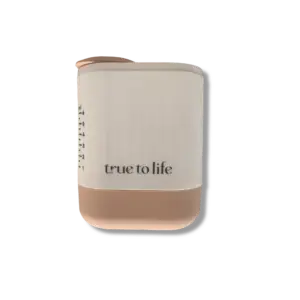
A targeted scalp health oil paired with a daily LED scalp massager can also be a beneficial addition to your routine, helping to nourish and moisturise the scalp while supporting circulation and overall scalp health. A healthy, well-cared-for scalp creates a better environment for your hair, while regular massage can also help you stay consistent with caring for the scalp beneath your hair.
However, scalp oil isn’t a way to stop normal shedding. Remember, some shedding is completely natural. The purpose of caring for your scalp is to maintain a healthy environment for your hair to grow, while addressing the specific needs of your scalp.
This is why we believe your hair-care routine should begin at the scalp, not just the lengths and ends.
Could Your Hair-Care Routine Be Irritating Your Scalp?
If your scalp constantly feels dry, tight, itchy or irritated after washing, your cleansing routine may not be working well for your individual needs.
A shampoo doesn’t need to leave your scalp feeling squeaky-clean to be effective. In fact, that stripped, tight feeling can be a sign that your scalp’s natural oils have been removed too aggressively.
At True to Life™, we take a different approach. Our personalised shampoos are non-stripping, meaning they cleanse without the harsh, overly stripped feeling that can come from more aggressive cleansing. Our personalised conditioners also help to soften, smooth and detangle the hair, making it easier to handle and helping to reduce unnecessary breakage and the amount of hair lost during brushing and detangling.
Your scalp still needs to be properly cleansed to remove sweat, excess oil and buildup, but the goal is balance, not stripping.
And because every scalp is different, what works beautifully for one person may not be the right choice for another. Paying attention to how your scalp feels and behaves can tell you a lot about whether your routine is actually working for you.
If your scalp is persistently itchy, irritated, inflamed or uncomfortable, don’t simply assume that increased shedding is something you should ignore. Scalp problems can have different causes, and persistent changes in shedding are worth discussing with a healthcare professional.
What Can Cause Excessive Hair Shedding?
A sudden increase in shedding can happen for many different reasons.
Potential factors include:
- Significant stress
- Illness or recovery from illness
- Hormonal changes
- Nutritional deficiencies
- Certain medications
- Major changes in weight
- Pregnancy and postpartum changes
- Some scalp conditions
- Other changes affecting the body
This is one reason it’s important not to assume that a new shedding problem is caused by one particular hair product or ingredient.
Your hair can sometimes reflect changes happening elsewhere in the body, so persistent or sudden shedding deserves proper attention.
How to Protect Your Hair From Unnecessary Breakage
While you can’t and shouldn’t try to eliminate normal shedding, you can take steps to reduce unnecessary breakage.
Gentle hair care can help you retain more of the length you grow.
Consider:
- Detangling gently rather than forcing through knots
- Avoiding excessive tension from tight hairstyles
- Being mindful of how aggressively you brush or comb
- Limiting unnecessary manipulation
- Protecting your hair while sleeping
- Keeping your scalp clean and comfortable
- Paying attention to your hair’s changing needs
- Avoiding routines that consistently leave your scalp or hair feeling stripped and irritated
Healthy hair isn’t about never seeing a strand in your brush. It’s about creating a routine that supports your scalp, protects your lengths and helps you retain the hair you grow.
When Should You Be Concerned About Hair Loss?
If you’re consistently shedding significantly more than usual, noticing visible thinning or developing bald patches, it’s worth speaking with a doctor or dermatologist.
The same applies if your increased shedding is accompanied by persistent scalp irritation, pain, itching or other changes.
Rather than trying to diagnose the cause yourself, a professional can help determine what’s behind the change and whether further investigation is needed.
Your Normal Is More Important Than a Number
The biggest takeaway isn’t that you need to count 50, 75 or 100 hairs every day.
The commonly quoted range can give you some perspective, but your personal baseline is often more useful than a specific number.
If you normally notice a small amount of shedding and suddenly start losing significantly more hair for several weeks, that’s worth paying attention to.
On the other hand, if you see a large amount of hair come out during one wash after several days without detangling, that doesn’t necessarily mean you’ve suddenly started losing your hair.
Learning what is normal for your hair can help you recognise genuine changes without turning every loose strand into a reason to panic.

R369.00
Estimated delivery dates: Sep 21, 2026 - Sep 24, 2026
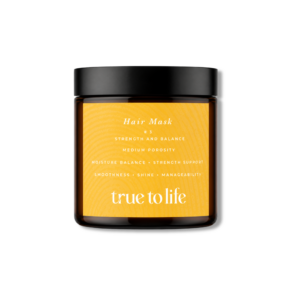
R339.00
Estimated delivery dates: Sep 21, 2026 - Sep 24, 2026

R515.00
Estimated delivery dates: Sep 21, 2026 - Sep 24, 2026

R309.00
Estimated delivery dates: Sep 21, 2026 - Sep 24, 2026

R1,897.00 – R2,480.00Price range: R1,897.00 through R2,480.00
Estimated delivery dates: Sep 21, 2026 - Sep 24, 2026

R944.00 – R1,396.00Price range: R944.00 through R1,396.00
Estimated delivery dates: Sep 21, 2026 - Sep 24, 2026

R918.00 – R1,402.00Price range: R918.00 through R1,402.00
Estimated delivery dates: Sep 22, 2026 - Sep 25, 2026
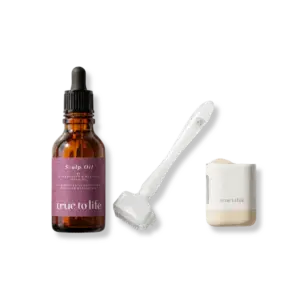
R911.00 – R958.00Price range: R911.00 through R958.00
Estimated delivery dates: Sep 21, 2026 - Sep 24, 2026

R745.00 – R1,213.00Price range: R745.00 through R1,213.00
Estimated delivery dates: Sep 21, 2026 - Sep 24, 2026
R189.99
Estimated delivery dates: Sep 21, 2026 - Sep 24, 2026

R279.00
Estimated delivery dates: Sep 21, 2026 - Sep 24, 2026
R279.00
Estimated delivery dates: Sep 21, 2026 - Sep 24, 2026
R379.00
Estimated delivery dates: Sep 21, 2026 - Sep 24, 2026
R439.99
Estimated delivery dates: Sep 21, 2026 - Sep 24, 2026
R369.00
Estimated delivery dates: Sep 21, 2026 - Sep 24, 2026
R349.00
Estimated delivery dates: Sep 21, 2026 - Sep 24, 2026
R349.00
Estimated delivery dates: Sep 21, 2026 - Sep 24, 2026
R349.00
Estimated delivery dates: Sep 21, 2026 - Sep 24, 2026

R499.00
Estimated delivery dates: Sep 22, 2026 - Sep 25, 2026
R269.00
Estimated delivery dates: Sep 22, 2026 - Sep 25, 2026
Start your hair growth journey with us.
Take the Hair Assessment to get a your recommended products to support your hair growth journey
Final Thoughts
So, how much hair loss is normal in a day? For many people, around 50 to 100 hairs is a commonly cited estimate, but there is no universal number that defines healthy hair.
Normal shedding is simply part of the hair-growth cycle. What matters more is whether your shedding has noticeably changed, whether you’re experiencing breakage or true hair loss, and whether your scalp remains healthy and comfortable.
At True to Life™, we believe healthy hair starts with understanding your individual hair and scalp, rather than following generic rules. You don’t need to fear every strand that falls. Instead, learn your normal, care for your scalp, protect your lengths and pay attention when something genuinely changes.
Post Views: 43