Free shipping on orders over R980 | First order? Get 10% off orders of R499 and above instead

“Personalised Shampoo – 200ml” has been added to your basket. View basket
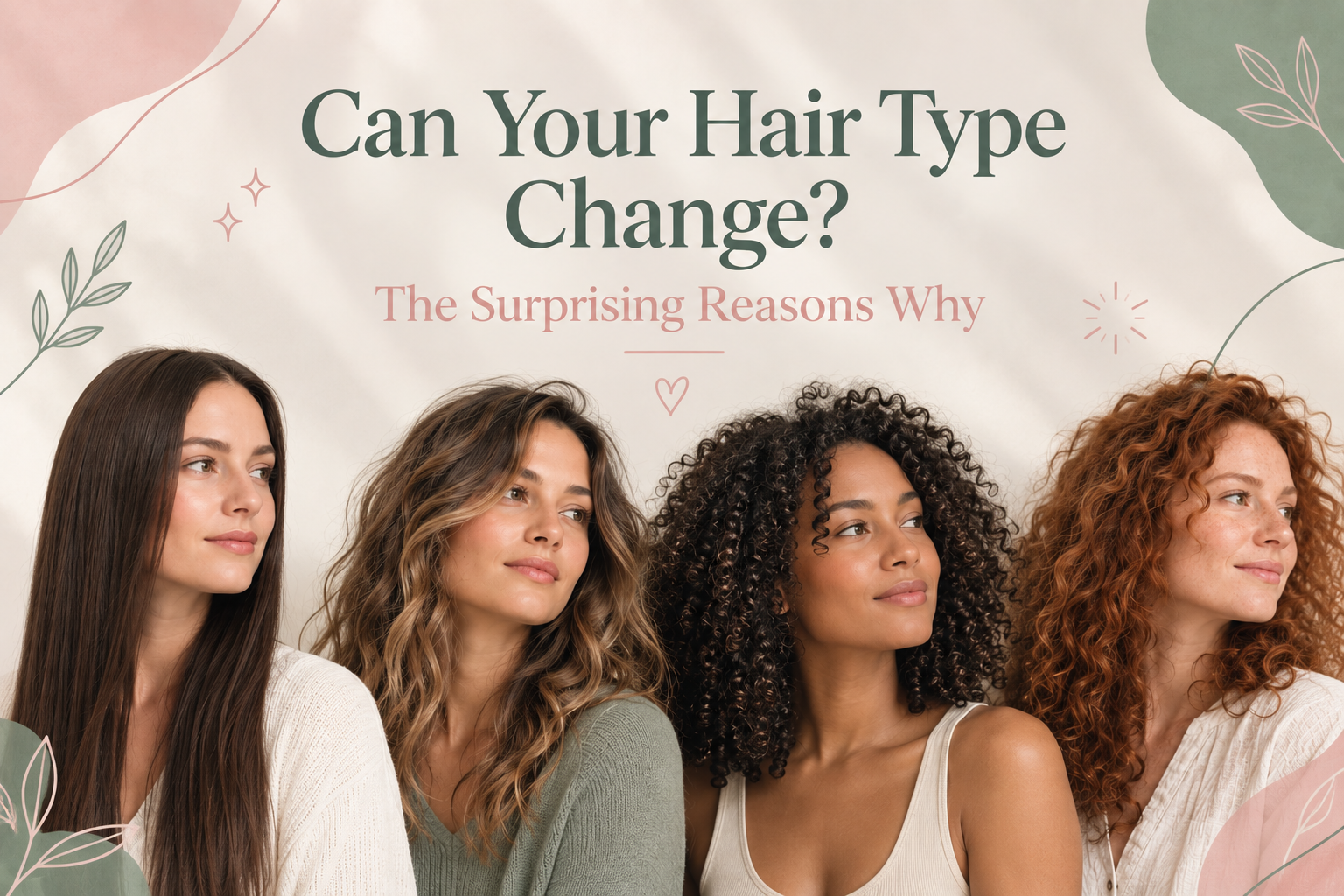
Can Your Hair Type Change? The Surprising Reasons Why
Have you ever looked at your hair and thought, “Was my hair always like this?” Maybe your straight hair has become wavy, your waves have become curlier, or your curls no longer seem to have the same definition they once did. While we often think of our hair type as something we’re born with and stuck with forever, your hair type can change over time.
Hormone changes, ageing, pregnancy, stress, major life events, and even hair damage can affect how your hair grows and behaves. Sometimes, however, what looks like a change in your hair’s condition.
Understanding the difference can help you figure out what your hair needs now, rather than continuing to care for the hair you had years ago.
What Determines Your Natural Hair Type?
Your natural hair type is largely influenced by genetics and the shape and structure of your hair follicles. The characteristics of the follicle influence how the hair fibre grows, including whether it tends to be straight, wavy, curly or coily.
Your individual strands also have their own characteristics. Hair can be fine, medium or coarse, and factors such as density, porosity and the condition of the hair fibre can affect how it looks and behaves.
This is why two people with the same general hair type can have completely different hair care needs.
Your hair type isn’t the only thing that determines how your hair behaves. Your hair’s condition, your scalp, hormones, environment, and daily habits can all make your hair look and feel different.
Can Straight Hair Become Wavy or Curly?
Yes, you can notice a genuine change in your hair’s curl pattern over time.
Someone who had naturally straight hair growing up may find that their hair becomes wavy later in life. Likewise, someone with naturally wavy hair may develop more noticeable curls, while someone with curly hair may find that their curls become looser or less defined.
This doesn’t necessarily mean that your genetics have suddenly changed. Changes in hormones and the hair follicle, as well as differences in the way new hair grows, can influence your natural pattern.
Another possibility is that your hair hasn’t changed type, but its condition has.
For example, damaged, dry or heavily coated hair may behave very differently from healthy hair. Heat and chemical damage can weaken the hair fibre and affect its ability to form and maintain its natural pattern.
So if your hair suddenly seems different, it’s worth asking:
Has my natural hair type changed, or has my hair’s condition changed?
Why Does Hair Type Change Over Time?
There isn’t one single reason why someone’s hair may start behaving differently. Changes can happen gradually or become noticeable after a particular period in your life.
Hormonal Changes
Hormones can significantly influence the hair growth cycle and how hair grows.
Puberty, pregnancy, postpartum changes and menopause can all coincide with noticeable changes in the hair. Some women find their hair becomes thicker, finer, curlier, straighter, drier, or harder to manage during different hormonal stages.
These changes can be particularly noticeable during pregnancy and after giving birth, when the body’s hormonal environment changes considerably.
If your hair has suddenly started behaving differently around a major hormonal change, you’re not necessarily imagining it. Your hair’s needs can change as you do.
Pregnancy and Postpartum Changes
Pregnancy is one of the most common times when people notice that their hair isn’t quite the same.
Some women experience thicker-looking hair during pregnancy, while others notice changes in texture or curl pattern. After giving birth, hormonal changes can also affect the hair growth cycle, which may lead to increased shedding and changes in how the hair looks and feels.
Your hair after pregnancy may not behave exactly like the hair you had before pregnancy, and that doesn’t necessarily mean anything is wrong.
Stress
Major physical or emotional stress can affect the body in many ways, including the hair growth cycle.
Periods of significant stress can sometimes be followed by increased shedding or noticeable changes in the appearance and condition of the hair. When new hair grows in, it may also appear or behave differently from the hair that was previously on your head.
This can make it seem as though your hair type has changed overnight, even though the change may actually be related to what your body has been experiencing.
Grief and Major Life Changes
Grief is an especially intense form of emotional stress, and some people notice changes in their hair during or after periods of bereavement.
While it would be too simplistic to say that grief directly changes someone’s hair type, significant emotional stress can affect the body and hair growth cycle. Changes in shedding, growth and the condition of new hair can sometimes make someone’s hair seem noticeably different.
This is one reason you may hear people say that their hair changed after losing a spouse, parent or another person close to them.
Hair doesn’t exist separately from the rest of your body. Internal changes can sometimes show up externally.
Ageing
Hair naturally changes as we get older.
Individual strands may become finer, the hair may become drier or more fragile, and overall density can decrease. Changes in the hair follicle can also affect how the hair grows.
As a result, someone who had thick, tightly curled hair when they were younger may find that their hair becomes finer or their curl pattern becomes less pronounced later in life.
That doesn’t mean your hair was ever “supposed” to stay the same. Your hair can change as your body changes.
Hair Damage
Not every change in hair behaviour is caused by hormones or ageing.
Bleaching, colouring, chemical treatments, frequent heat styling, excessive brushing and other forms of physical or chemical stress can alter the structure and condition of the hair fibre.
Damaged hair may become:
- Rougher or more coarse-feeling
- Drier
- More porous
- Frizzier
- More prone to breakage
- Less defined
- More difficult to style
- Less able to hold its natural curl or wave pattern
This is particularly important if you think your hair type has changed after years of heat styling or chemical processing.
Your follicles may still be producing hair with the same natural pattern, but the hair that has already grown out may no longer behave in the same way.
Your Environment and Lifestyle
Sometimes the change isn’t permanent.
Humidity can make hair appear curlier or frizzier, while dry weather can leave it feeling rough and less defined. Hard water and product buildup can also affect the way hair feels and behaves.
Changes to your routine can affect it too. Washing your hair more or less frequently, using different products, changing how you style it, or simply moving to a different climate can all make your hair seem different.
Is Your Hair Type Changing, or Is Your Hair Damaged?
This is where things can get confusing.
If your hair has suddenly become dry, frizzy and difficult to manage, it doesn’t necessarily mean you’ve developed a completely new hair type. The same applies if your curls have become less defined after repeated heat styling or chemical processing.
Think about when you first noticed the change.
If your hair changed gradually alongside ageing or a major hormonal shift, an underlying biological reason may be at play.
If the change appeared after bleaching, colouring, frequent heat styling or another damaging process, the condition of the hair may be the bigger factor.
If your hair behaves differently depending on the weather, products, or how recently you’ve washed it, environmental factors or buildup may be contributing.
Sometimes, of course, several factors can be happening at once.
Can Your Hair Type Change Back?
It depends on what caused the change.
If your hair looks different because of temporary factors such as buildup, dryness, or environmental conditions, addressing the underlying issue may help it return to behaving more like it did before.
Damage is different. Once the hair fibre is significantly damaged, it can’t repair itself back to its original condition. New hair can grow from the follicle, but you’ll need to care for the damaged lengths as they grow out.
Hormonal and age-related changes may also be longer-lasting.
Your hair doesn’t necessarily have to return to its “old” type for it to be healthy, though. Sometimes the most useful thing you can do is stop trying to make your current hair behave like the hair you had five or ten years ago.
What to Do If Your Hair Type Has Changed
If your hair has changed, your hair care routine may need to change with it.
Instead of automatically reaching for the products you’ve always used, pay attention to what your hair is actually telling you now.
Ask yourself:
- Does my hair feel drier than it used to?
- Has my curl or wave pattern changed?
- Are my strands finer or more fragile?
- Am I experiencing more breakage?
- Does my hair need more moisture?
- Have I recently experienced hormonal or lifestyle changes?
- Have I changed my colour, styling or heat routine?
- Could buildup or my environment be affecting my hair?
Your hair care doesn’t have to stay the same forever.
With True to Life™, you can retake the hair quiz when your hair’s needs change. Your results can then be reassessed so your personalised formula can be adjusted to suit what your hair needs now.
Because the goal isn’t to force your hair back into the category it used to fit into. It’s to care for the hair you have today.
When Should You Pay Attention to a Sudden Change?
A gradual change in hair behaviour isn’t necessarily something to worry about. Hair naturally changes throughout life.
However, a sudden or dramatic change accompanied by significant shedding, noticeable thinning, scalp changes or other unexplained changes may be worth discussing with a healthcare professional.
Your hair can sometimes provide clues about what is happening elsewhere in the body, so significant or persistent changes shouldn’t always be dismissed as simply having a “new hair type”.
R369.00
Estimated delivery dates: Sep 22, 2026 - Sep 25, 2026
R339.00
Estimated delivery dates: Sep 22, 2026 - Sep 25, 2026
R515.00
Estimated delivery dates: Sep 22, 2026 - Sep 25, 2026
R309.00
Estimated delivery dates: Sep 22, 2026 - Sep 25, 2026
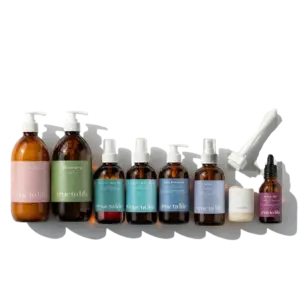
R1,897.00 – R2,480.00Price range: R1,897.00 through R2,480.00
Estimated delivery dates: Sep 22, 2026 - Sep 25, 2026
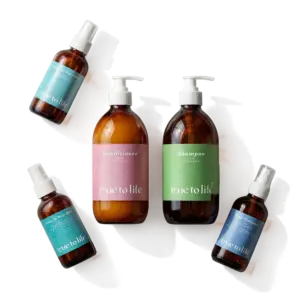
R944.00 – R1,396.00Price range: R944.00 through R1,396.00
Estimated delivery dates: Sep 22, 2026 - Sep 25, 2026
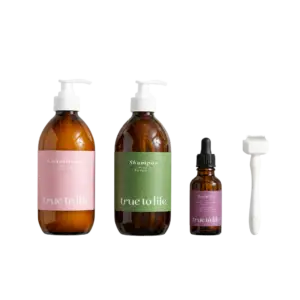
R918.00 – R1,402.00Price range: R918.00 through R1,402.00
Estimated delivery dates: Sep 23, 2026 - Sep 28, 2026
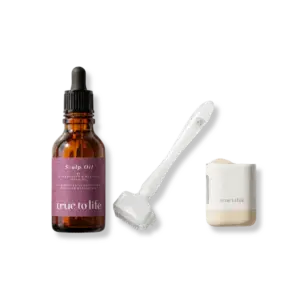
R911.00 – R958.00Price range: R911.00 through R958.00
Estimated delivery dates: Sep 22, 2026 - Sep 25, 2026
R745.00 – R1,213.00Price range: R745.00 through R1,213.00
Estimated delivery dates: Sep 22, 2026 - Sep 25, 2026
R189.99
Estimated delivery dates: Sep 22, 2026 - Sep 25, 2026
R279.00
Estimated delivery dates: Sep 22, 2026 - Sep 25, 2026
R279.00
Estimated delivery dates: Sep 22, 2026 - Sep 25, 2026
R379.00
Estimated delivery dates: Sep 22, 2026 - Sep 25, 2026
R439.99
Estimated delivery dates: Sep 22, 2026 - Sep 25, 2026
R369.00
Estimated delivery dates: Sep 22, 2026 - Sep 25, 2026
R349.00
Estimated delivery dates: Sep 22, 2026 - Sep 25, 2026
R349.00
Estimated delivery dates: Sep 22, 2026 - Sep 25, 2026
R349.00
Estimated delivery dates: Sep 22, 2026 - Sep 25, 2026
R499.00
Estimated delivery dates: Sep 23, 2026 - Sep 28, 2026
R269.00
Estimated delivery dates: Sep 23, 2026 - Sep 28, 2026
Start your hair growth journey with us.
Take the Hair Assessment to get a your recommended products to support your hair growth journey
Final Thoughts
Your hair type isn’t necessarily as fixed as it may seem.
The hair you have in your twenties may not behave exactly like the hair you had as a child, and the hair you have after pregnancy, during hormonal changes or following a major period of stress may not behave the same either.
Sometimes your natural hair pattern really does change. Other times, your hair is simply responding to damage, dryness, buildup, your environment or changes happening inside your body.
Either way, the important thing is to pay attention to what your hair needs now.
Your hair care routine should be able to change as you do.
Post Views: 37