Skip to content
Free shipping on orders over R980 | First order? Get 10% off orders of R499 and above instead

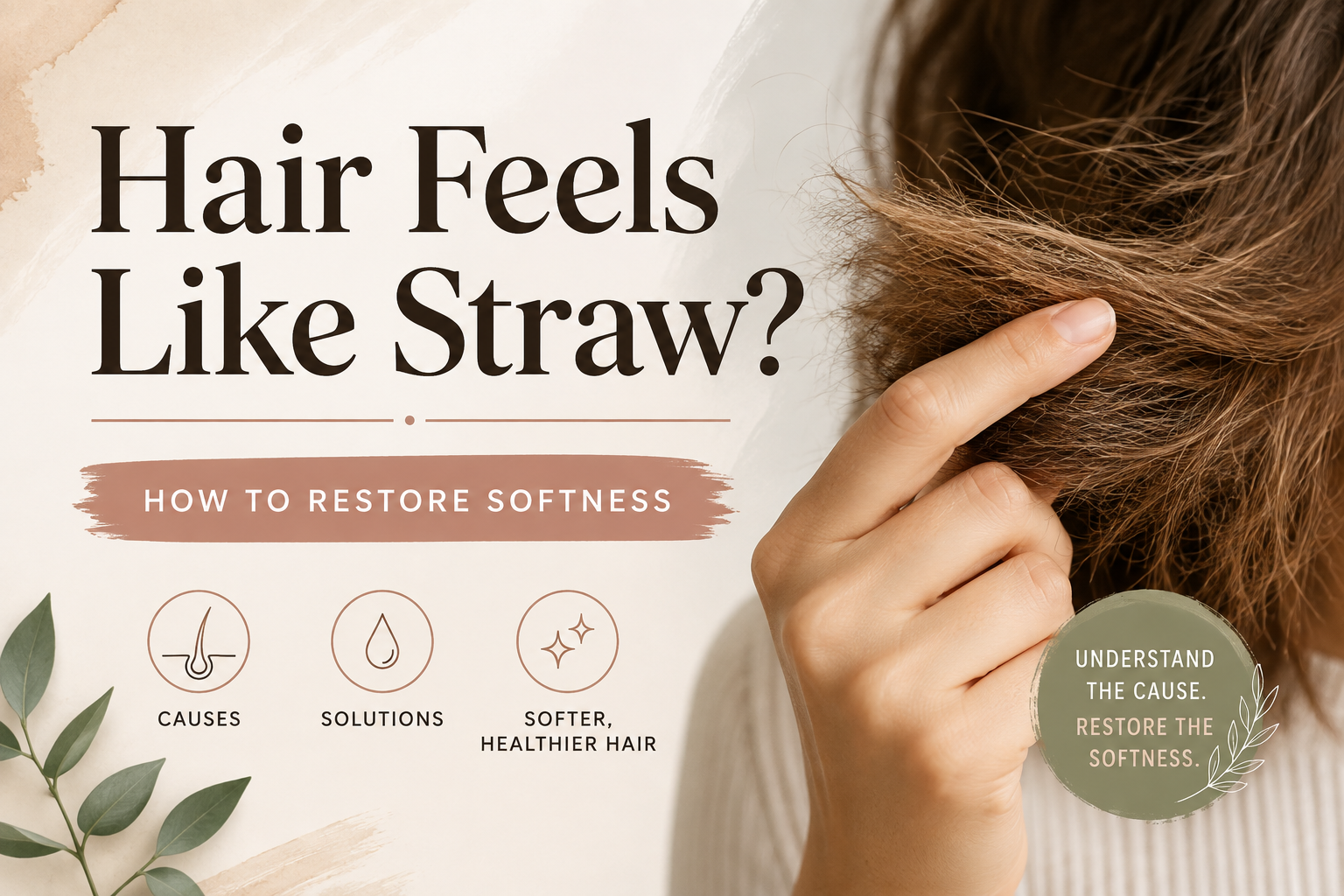
Hair Feels Like Straw? How to Restore Softness
Have you ever wondered why your hair feels like straw, even when you’re taking good care of it? Instead of feeling soft and flexible, your hair may feel rough, dry, stiff, or almost crunchy to the touch. It may also seem harder to detangle, more prone to frizz, or unusually difficult to style.
Straw-like hair is usually a sign that something has changed in the condition of your hair. While dryness is one possible cause, it isn’t always the whole story. Heat, chemical processing, buildup, hard water, over-cleansing and mechanical damage can all affect how your hair feels.
The good news is that once you understand why your hair feels like straw, you can make more informed changes to your routine and help your hair feel softer, smoother and more manageable.
Why Does My Hair Feel Like Straw?
Healthy hair should have some flexibility and movement. When hair feels rough and straw-like, the outer layer of the hair may be struggling to retain moisture, or the hair may have accumulated damage or buildup.
Sometimes the cause is obvious, such as frequent straightening or bleaching. Other times, your hair can gradually become drier and rougher without one clear trigger.
This is why simply adding more conditioner isn’t always the answer. The first step is working out what is making your hair feel rough in the first place.
What Causes Hair That Feels Like Straw?
There are several reasons your hair may suddenly feel dry, rough or straw-like. Your routine, environment and the condition of your hair can all play a role.
Your Hair Is Too Dry
One of the most common reasons hair feels like straw is simply a lack of moisture.
Hair can lose moisture through frequent washing, heat exposure, dry weather and environmental conditions. When the hair becomes excessively dry, it can feel rough rather than smooth and flexible.
You may also notice:
- Increased frizz
- More tangling
- Rough ends
- Difficulty detangling
- Hair that feels stiff or brittle
- More breakage than usual
However, it’s important not to assume that every case of straw-like hair is caused by dryness.
Heat Styling Can Make Hair Feel Like Straw
Regular use of straighteners, curling irons, hot brushes and high-heat blow-dryers can contribute to dryness and damage.
Repeated heat exposure can affect the hair’s outer structure, leaving it feeling rougher and less smooth. Over time, this can also make the hair more vulnerable to breakage.
If your hair feels particularly rough after heat styling, try reducing how often you use hot tools and always consider how much heat your hair is being exposed to.
Your hair doesn’t necessarily need to be completely heat-free, but less unnecessary heat can make a significant difference over time.
Chemical Processing Can Cause Dry, Rough Hair
Bleaching, colouring, relaxing and other chemical processes can change the structure of the hair.
The more frequently hair is chemically processed, particularly when overlapping treatments or repeatedly lightening the same lengths, the greater the potential for damage.
Chemically processed hair may become:
- Dry
- Rough
- Brittle
- Porous
- Difficult to detangle
- More prone to split ends and breakage
If your hair became noticeably straw-like after bleaching or another chemical treatment, the processing itself may be an important part of the problem.
Product Buildup Can Make Hair Feel Rough
Interestingly, hair that feels dry doesn’t always need more products.
Styling products, conditioners, oils and other ingredients can accumulate on the hair over time. This buildup can leave your hair feeling coated, dull, heavy or strangely rough.
You might notice that your usual products suddenly don’t seem to work as well. Your hair may feel both dry and coated at the same time.
In this situation, continually adding more oils, masks and conditioners may not solve the problem. Your hair may benefit more from an appropriate cleansing routine that removes excess buildup.
Hard Water Can Affect Your Hair
The water you wash your hair with can also influence how it feels.
Hard water contains higher levels of minerals, which can accumulate on the hair over time. This may leave the hair feeling dull, rough or coated, and can make it more difficult for your usual hair care routine to work effectively.
If your hair consistently feels different after moving to a new area, or your hair feels rough despite having a routine that previously worked well, your water quality may be worth considering.
Overwashing or Harsh Cleansing May Leave Hair Dry
Your scalp needs to be cleansed, but your hair lengths don’t necessarily need to be stripped every time you wash.
Washing too frequently for your individual needs, using a cleanser that is too harsh for your hair, or repeatedly trying to remove buildup can leave the lengths feeling dry and rough.
That doesn’t mean you should avoid shampoo. A healthy scalp still needs proper cleansing. The goal is finding a cleansing routine that keeps the scalp clean without unnecessarily compromising the condition of the lengths.
Your Hair May Be Experiencing Too Much Mechanical Damage
Sometimes the problem isn’t what you’re putting on your hair, but what you’re doing to it.
Rough brushing, aggressive detangling, tight hairstyles, friction and repeatedly pulling through knots can all contribute to mechanical damage.
This can become particularly noticeable when the hair is already dry or chemically processed.
If you’re constantly fighting through tangles, brushing aggressively to get them out can create a cycle:
Dryness → tangling → rough detangling → breakage → shorter, damaged ends.
Being gentler with your hair can therefore be just as important as choosing the right products.
When Hair Feels Like Straw, Does It Need More Moisture?
Not necessarily.
This is one of the easiest mistakes to make when trying to fix dry, rough hair. You feel a rough texture, assume your hair is thirsty, and immediately start adding more moisturising products.
Sometimes that helps. Sometimes it doesn’t.
Your hair may feel straw-like because of dryness, buildup, mineral deposits, heat damage, chemical damage or mechanical damage. These problems can look similar but require different approaches.
Think of the texture as a clue rather than a diagnosis.
If your hair feels rough after months of bleaching, adding more conditioner won’t undo the underlying chemical damage. If your hair feels coated because of buildup, adding another oil may make the problem worse.
Understanding the cause is much more useful than simply adding more products.
How to Fix Hair That Feels Like Straw
Once you have a better idea of what’s causing the problem, you can start adjusting your routine.
Reconsider Your Washing Routine
Look at how often you’re washing your hair and what happens afterwards.
Does your hair feel soft and clean after washing, or immediately dry and tangled? Does it become coated again after several days? Are you using a lot of styling products?
Your routine should be based on your scalp and hair, rather than a universal washing schedule.
Focus on Conditioning
If dryness is contributing to the straw-like texture, consistent conditioning can help improve softness and manageability.
Pay particular attention to the lengths and ends, which are generally older and have experienced more environmental and mechanical stress than the hair closer to the scalp.
The goal isn’t to make your hair feel coated. It’s to help the hair remain manageable, flexible and less prone to unnecessary friction.
Reduce Unnecessary Heat
If your hair feels rough and brittle, take a closer look at how often you’re using heat.
Try to:
- Reduce the frequency of hot-tool use
- Avoid unnecessarily high temperatures
- Allow hair to partially air-dry when practical
- Avoid repeatedly going over the same section
- Use appropriate heat protection when heat styling
Small changes can add up when you’re trying to retain healthier lengths.
Be Gentler When Detangling
Don’t underestimate the impact of how you handle your hair.
Work through tangles patiently rather than repeatedly pulling a brush through them. Avoid ripping through knots, particularly when the hair is wet and vulnerable.
If your hair tangles easily, improving its manageability can help reduce the amount of mechanical stress it experiences every wash day.
Address Buildup When Necessary
If your hair feels coated, dull or heavy as well as rough, buildup may be contributing to the problem.
A suitable clarifying or deeper cleansing routine can help when buildup is the issue. However, clarifying more often isn’t automatically better.
The right frequency depends on your hair, scalp, products and lifestyle.
Consider Your Water
If you suspect hard water is affecting your hair, consider whether the texture changed after moving to a different location or whether your hair consistently feels rough after washing.
Addressing the water itself may be more useful than continually changing your hair products.
How to Prevent Your Hair From Feeling Like Straw Again
Fixing straw-like hair isn’t only about what you do once the problem appears. Your everyday habits can determine whether the hair continues to become drier and more damaged.
Try to build a routine that includes:
- Regular but appropriate cleansing
- Consistent conditioning
- Gentle detangling
- Less unnecessary heat
- Protection from excessive friction
- Careful handling of wet hair
- Appropriate treatment for chemically processed hair
- Attention to buildup and hard water
- Regular assessment of how your hair is actually responding
Most importantly, pay attention to changes.
Your hair can tell you a lot through its texture. If something that normally works suddenly leaves your hair feeling dry, coated or rough, that’s worth investigating rather than simply adding another product.
Straw-Like Hair and Hair Breakage
When hair is extremely dry, damaged or brittle, breakage can become a bigger concern.
This is particularly frustrating when you’re trying to grow your hair longer. Your scalp may be producing new growth, but if your older lengths are constantly snapping, you may not see the length you’re working towards.
This is where healthy hair care becomes about more than just hair growth.
Protecting the lengths, reducing breakage and maintaining the condition of your existing hair can help you keep more of the length you grow.
If your hair feels like straw and you’re also noticing shorter pieces, split ends or excessive shedding from the lengths, it’s worth taking a closer look at your routine before simply trying to grow your hair faster.
The True to Life™ Approach When Your Hair Feels Like Straw
When your hair feels like straw, it’s tempting to reach for the richest conditioner, deepest hair mask or newest trending treatment you can find.
But at True to Life™, we believe healthy hair starts with understanding why your hair feels the way it does.
Dryness, buildup, hard water, heat, chemical processing and mechanical damage can create similar symptoms, but they don’t necessarily need the same solution. What works beautifully for one person’s hair may leave another person’s hair feeling heavy, coated or even less manageable.
Instead of following a generic routine, consider your hair, scalp, lifestyle and existing routine as a whole.
Why does your hair feel like straw? When did the texture change? How does your hair feel immediately after washing? Does it become rough again a few days later? Is it tangling more than usual? Are you experiencing breakage? Have you recently changed your products, colour, styling habits or environment?
These details can help reveal what your hair actually needs.
That’s the foundation of the True to Life™ approach: personalised hair care based on your individual hair and scalp, rather than generic off-the-shelf products or a one-size-fits-all routine.
When Should You Get Professional Advice?
If your hair remains extremely dry and brittle despite making changes to your routine, it may be worth getting personalised advice.
The same applies if you’re experiencing significant breakage, sudden changes in hair texture, persistent scalp problems or damage following chemical processing.
Sometimes, the most helpful thing you can do is stop guessing and have someone look at the bigger picture.

R369.00
Estimated delivery dates: Sep 21, 2026 - Sep 24, 2026

R339.00
Estimated delivery dates: Sep 21, 2026 - Sep 24, 2026

R515.00
Estimated delivery dates: Sep 21, 2026 - Sep 24, 2026

R309.00
Estimated delivery dates: Sep 21, 2026 - Sep 24, 2026

R1,897.00 – R2,480.00Price range: R1,897.00 through R2,480.00
Estimated delivery dates: Sep 21, 2026 - Sep 24, 2026
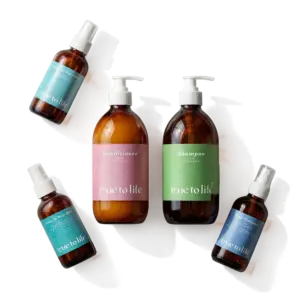
R944.00 – R1,396.00Price range: R944.00 through R1,396.00
Estimated delivery dates: Sep 21, 2026 - Sep 24, 2026
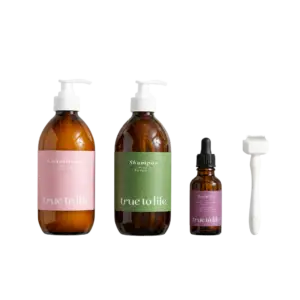
R918.00 – R1,402.00Price range: R918.00 through R1,402.00
Estimated delivery dates: Sep 22, 2026 - Sep 25, 2026
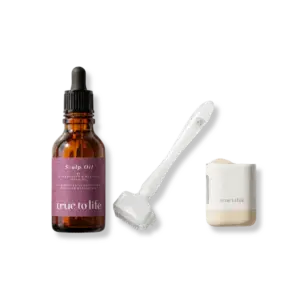
R911.00 – R958.00Price range: R911.00 through R958.00
Estimated delivery dates: Sep 21, 2026 - Sep 24, 2026
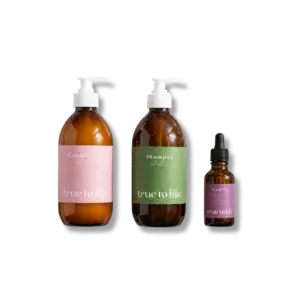
R745.00 – R1,213.00Price range: R745.00 through R1,213.00
Estimated delivery dates: Sep 21, 2026 - Sep 24, 2026
R189.99
Estimated delivery dates: Sep 21, 2026 - Sep 24, 2026
R279.00
Estimated delivery dates: Sep 21, 2026 - Sep 24, 2026
R279.00
Estimated delivery dates: Sep 21, 2026 - Sep 24, 2026
R379.00
Estimated delivery dates: Sep 21, 2026 - Sep 24, 2026
R439.99
Estimated delivery dates: Sep 21, 2026 - Sep 24, 2026
R369.00
Estimated delivery dates: Sep 21, 2026 - Sep 24, 2026
R349.00
Estimated delivery dates: Sep 21, 2026 - Sep 24, 2026
R349.00
Estimated delivery dates: Sep 21, 2026 - Sep 24, 2026
R349.00
Estimated delivery dates: Sep 21, 2026 - Sep 24, 2026
R499.00
Estimated delivery dates: Sep 22, 2026 - Sep 25, 2026
R269.00
Estimated delivery dates: Sep 22, 2026 - Sep 25, 2026
Start your hair growth journey with us.
Take the Hair Assessment to get a your recommended products to support your hair growth journey
Final Thoughts
If your hair feels like straw, don’t assume that you need more moisture.
That rough, dry texture signals that something about your hair or routine may need attention. It could be dryness, buildup, hard water, heat, chemical processing, mechanical damage, or a combination of several factors.
Instead of throwing more products at the problem, start by asking why your hair feels like straw in the first place.
Once you understand the cause, you can build a routine that supports softer, healthier, more manageable hair, while protecting the lengths you’ve already worked so hard to grow.
Post Views: 106